Virtual reality for community.
Supported by AGOG.
ISC is a research-art project exploring XR distribution through the lens of the practitioner. This work is a paradigm shift from the current tech/storytelling trends, taking an expansive perspective and leveraging a global network. This is a hands-on, grassroots approach with a focus on responsible, human-centered ways to share virtual reality narrative experiences in community-centered formats. The club is about the circles that gather.
How, where and why we share these experiences matters.
We are testing the format of repeated frequency gathering with programming around the program – but also observing, connecting, and listening.
The goal is to experiment and gather information to develop a living toolkit that can help bring curious partners more easily in contact with programming that engenders meaningful encounters with one of the most powerful storytelling tools humans have ever built.
VR has been described as the most powerful empathy machine ever built. Being inside a story is an intense and intimate experience unlike any other form of media. This poses risks inherent to the medium.
So why attempt to find solutions for sharing it? Because the medium is the message; wearing a screen that brings you inside another perspective is remarkable, especially when the experience is made with care and intention. This medium can provoke experiences that are impossible to share in another way.
Inspired by work from Atlas V, Lucid Realities, Project Daastaan, Skill Lab, Zhuzmo, and many more, we are finding ways to value the intimacy of immersion mixed with the urgency of new forms of storytelling in a time of polarisation and apathy. We want to explore ways it can be easier and more meaningful for communities and institutions to gather around these works.
There are bottlenecks. There is room for experimentation. There are more possibilities for these stories than the industry has explored. The technology alone does not produce depth. What happens around it can.
A decade of grant-funded, independently produced, artistically rich VR films already exists. That canon sits largely unseen outside of festivals and select screenings, inaccessible to communities it might resonate with. The material is there. The structure for engagement is lacking.
ISC poses a different question: where can VR actually work to create connection? What formats make sense for people and for the medium?
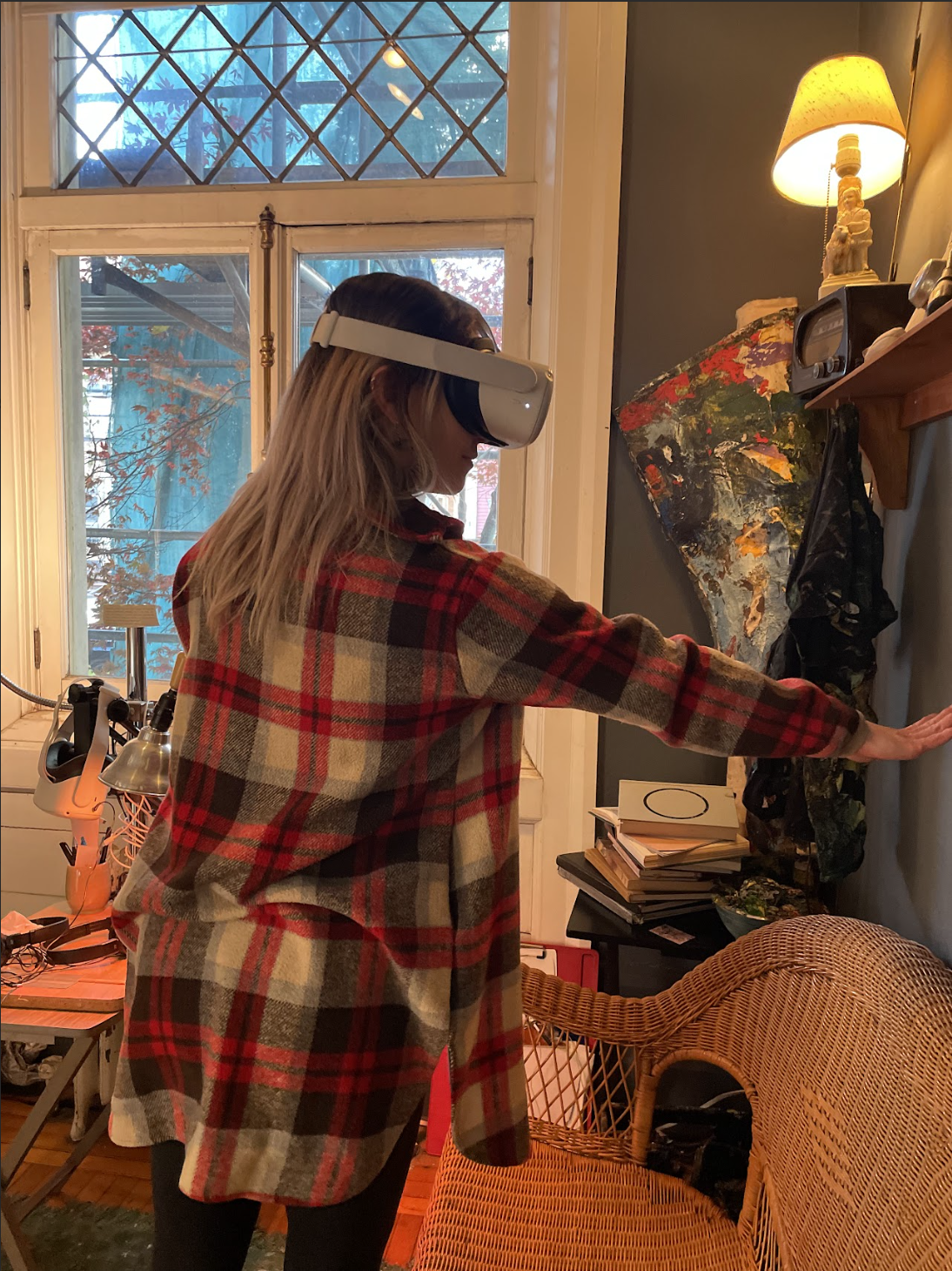
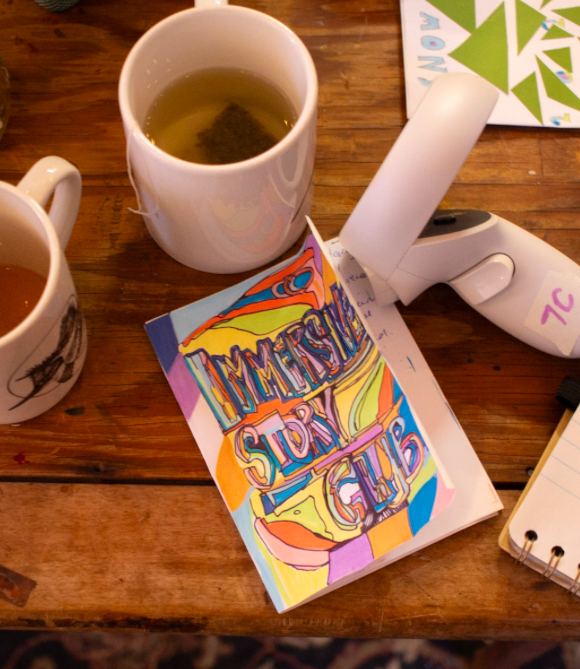

The shared memory of having been in an intimately powerful VR story is unlike any experience. It creates a reference point, a foundation for connection that did not exist before.
ISC takes that observation seriously as a research premise. Can VR work best as a catalyst for conversation, reflection, and shared meaning-making rather than as an endpoint in itself? How does the structure around the experience matter?
Our research is exploring these questions: what should that structure look like? What facilitation approach opens a room to connection? What experiences land in group settings, and why? What happens when the same community gathers around a VR story more than once?
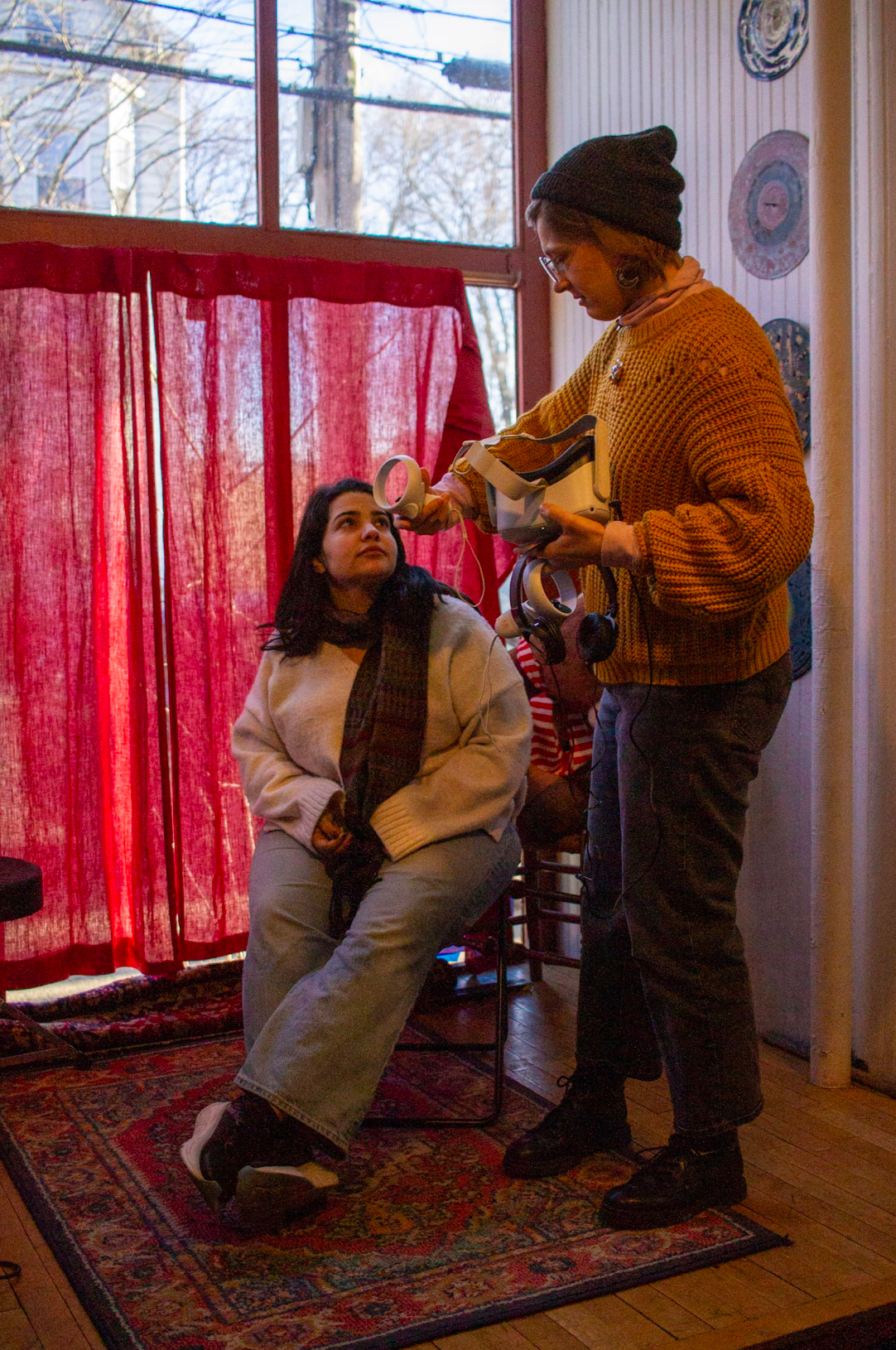
ISC is piloting facilitated gatherings around single VR films in community spaces. Each session features a different story from the past decade of independently produced immersive work, licensed or available open source, made possible through grant support from Agog. A key component of the gathering is making space for discussion about the experience, the role of technology in our lives, and a space to express in the written or visual form.
Every session is a data point. The facilitation approach, the selection, the pacing, the creative response activity, the size of the group, the nature of the space are all documented, questioned, and revised. The goal is not to prove that our proprietary format works. The goal is to understand what conditions make gathering around VR meaningful, and to build those conditions into best practices that can be shared.
Our ultimate guiding question underneath all of it is how do we share VR ethically and responsibly, and how do we teach others to do the same?
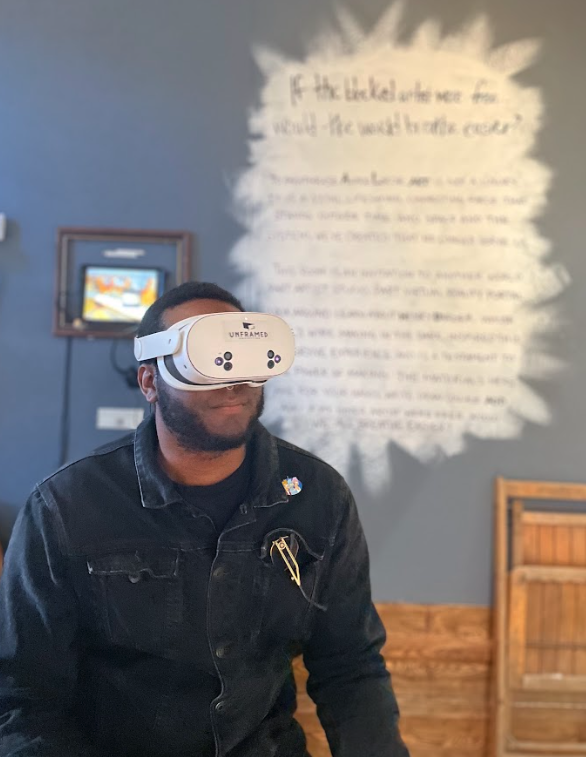
ISC has run sessions across New Haven, Torrington, and New York since 2025 with public community groups, teenagers, adults over 70 encountering VR for the first time, professional artists, and library program participants.
The clearest finding so far is VR stories are impactful – they can be a springboard for conversation and reflection. There is unexplored potential in settings that make sense for small to medium sized groups to workshop and reflect. In some ways, VR film distribution bottlenecks reflect larger disconnects between the world of tech/arts production and the groups of people / impact hoped for. Is it technology? Or is it the way we make space for togetherness?
We have many questions driving our next phase of development. Questions like:
These questions are open. The research is ongoing. If your organization is interested in being part of it as a host venue, a collaborator, or a critical voice, the conversation is worth having.

This project exists because of the organizations and individuals who believed in it early. Thank you to Agog for being among the first to support this research in existing.
Agog is a philanthropic organization that brings together social-change agents, thinkers, and builders, helping them create new ways to learn, inspire, and collaborate through the use of immersive technologies such as virtual and augmented reality.

Ember runs a weekly grassroots poetry night that consistently provides moments for expression and literacy engagement for adults of all levels, without pressure or expectation. Formerly a family supervisor for adolescents in residential mental health treatment, she builds on years of experience facilitating poetry and photography-based therapeutic groups.
Her background in direct mental healthcare informs her relationships with colleagues and community members alike. She currently works in healthcare quality for an independent physicians association based out of New Haven, Connecticut.

Formerly Head of Distribution at Astrea, the distribution branch of Paris-based, Emmy-winning studio Atlas V, Danielle led exhibition strategy and global partnerships before shifting her focus to grassroots and place-based work in New England and France. She founded Under the Umbrella, a community-based spoken word series, where she found inspiration in how expression and cathartic connection build meaning over time. Since 2024 she has worked freelance with XR studios and creators, taught, and written for XRMust.
Danielle’s practice explores how public service values and care-based models might reshape the way creative technology is shared.

Rebecca Harvey is a marketing consultant and graphic designer with a focus on ethical communication for mission-driven projects. Currently completing a degree in business transformation for sustainability, her work centers on transforming how organizations operate toward more responsible models. She brings a combination of visual communication, systems thinking, and a practice rooted in community gathering to the ISC project.
Outside her consulting work, Rebecca is a writer and community organizer. She is host and managing director of Under the Umbrella Paris, a community-based spoken word series.

We believe with great power comes great responsibility and so we have joined the National Digital Inclusion Alliance and continually seek to bring critical eyes and perspectives into this work.

Games for Change launched XR for Change in 2017 to build a community of practice around immersive media as a vehicle for social impact. Their commitment to responsible, community-centered approaches to emerging technology makes them a grounding presence in this work.
ISC documents its process publicly with field notes from sessions, reflections on what the research is revealing, and honest accounts of what is still unresolved.
If you are curious about this type of community programming…
Supported by AGOG.